

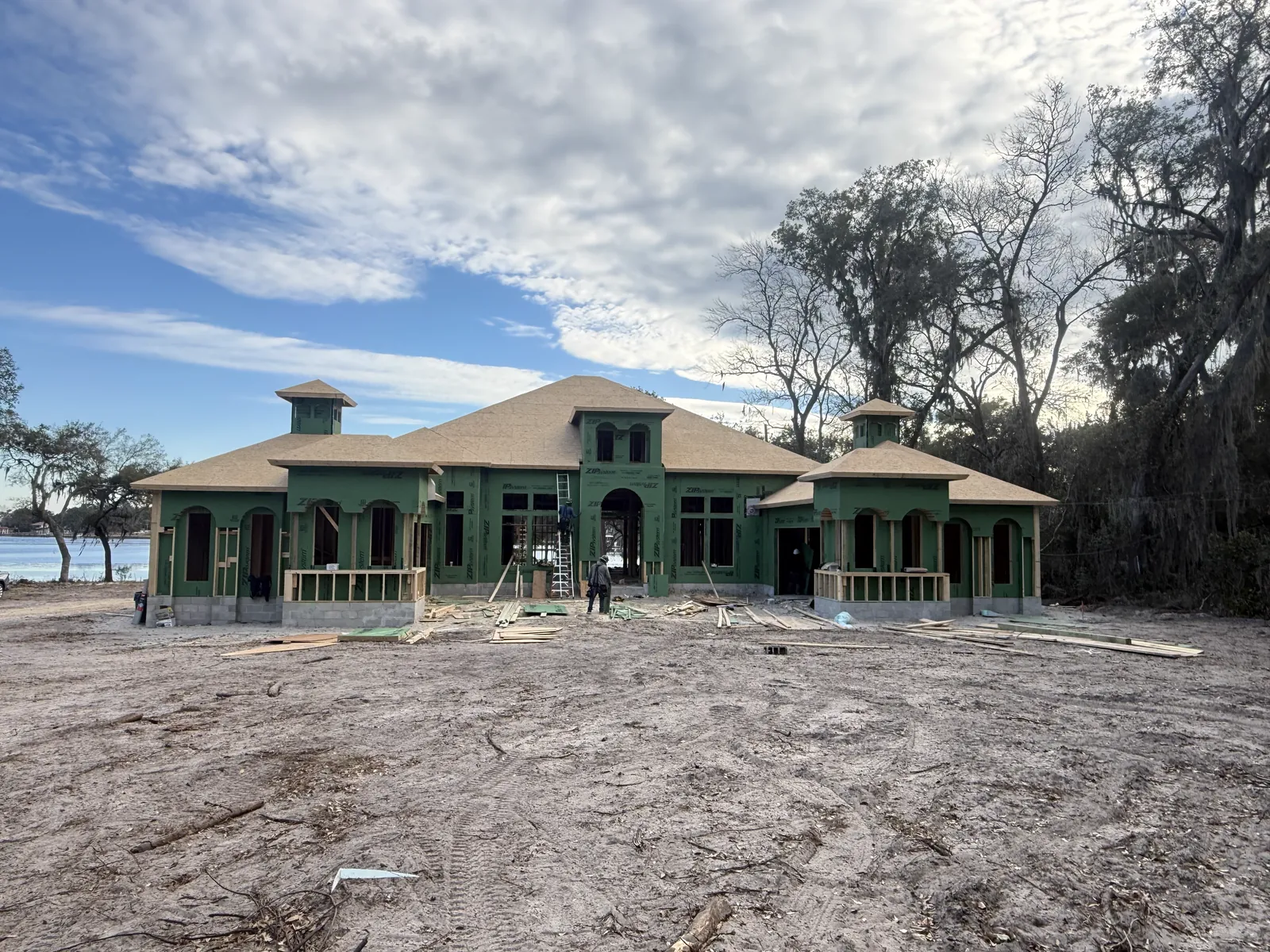
People often ask us for a price per square foot for framing. We understand why. It is a simple number to compare. The problem is that two buildings with the same square footage can take very different amounts of work to frame. Here is what actually moves a framing quote, so you know what you are comparing.
Size is only the starting point
Square footage gives a rough idea of how much wall, floor and roof there is to build. But a long, simple ranch house and a compact two-story with the same footprint are not the same job. Height, shape and detail matter as much as size.
Number of stories and ceiling heights
Every extra story adds a floor system, more lifting and more time working off ladders, scaffolding or lifts. Tall ceilings and two-story rooms need longer studs and more bracing. Multi-story apartment buildings add crane time for trusses and more coordination with the general contractor.
The roof
A simple gable roof with trusses goes up much faster than a roof with hips, valleys, turrets, dormers and several different pitches. Custom homes with complex rooflines, like many of the waterfront homes we frame, take more layout, more cuts and more time on the roof. If the roof is framed on site instead of with trusses, that adds labor too.
Openings, beams and engineered lumber
Large windows, wide sliding doors and open floor plans look great. They also mean bigger headers, beams, posts and often engineered lumber. Each of those has to be sized and placed exactly as the plans show. More openings and more beams mean more labor and more material.
Sheathing and wind details
The type of sheathing changes the price. ZIP System costs more than standard sheathing, but it removes the need for a separate house wrap crew. We explain the tradeoff in ZIP System vs. house wrap. Homes near the coast also carry more straps, connectors and tighter nailing for wind loads, which adds time on every wall and roof.
Labor only, or labor and materials
When you compare quotes, check what is included. Some framing quotes are labor only, with the builder supplying lumber, trusses and hardware. Others include materials. Lumber prices move, so a quote that includes material should say how long the price is good for. Make sure you are comparing the same scope.
Site conditions and access
A flat, open lot with room to stage material is easier to work on than a tight infill lot or a site where deliveries have to be carried in. Muddy or sandy sites, limited parking and long carries all add time. On large commercial sites, how material is staged can make a real difference.
Schedule
A project that needs to move faster than normal may need a larger crew or longer days. A project that starts and stops while waiting on other trades costs more to staff than one that runs straight through. Clear communication about the schedule helps us price the job accurately.
How to get an accurate framing estimate
The fastest way to a real number is to send us:
- Your plans, including the structural sheets and truss layout if you have them.
- The project address, so we know the site and the local code requirements.
- Your timeline and when the slab or foundation will be ready.
- Whether you want a labor-only price or labor and materials.
With that, we can usually get back to you within 24 hours with real numbers. There is no obligation and no sales pitch. You can see the kinds of projects we price on our residential framing and commercial framing pages, and if you are comparing crews, read what to look for in a framing subcontractor.
Want a price for your project? Send your plans and we will reply, usually within 24 hours.